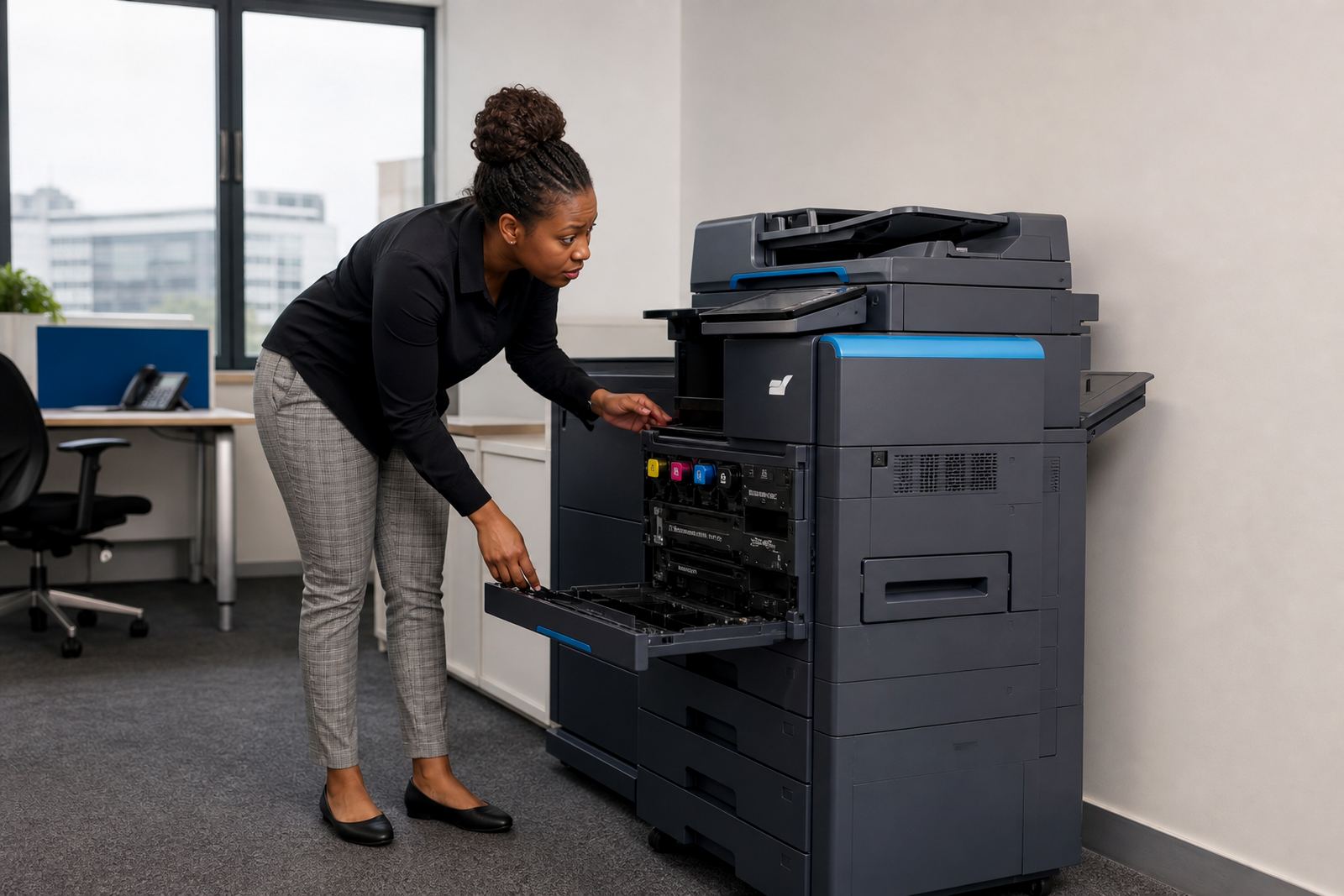

Treat the storeroom like part of the print room
In many offices, the support area becomes a catch-all for stationery, old boxes and spare cartridges. That works until humidity, heat or poor stacking starts affecting the print room, because toner and paper do not like being left wherever space happens to open up.
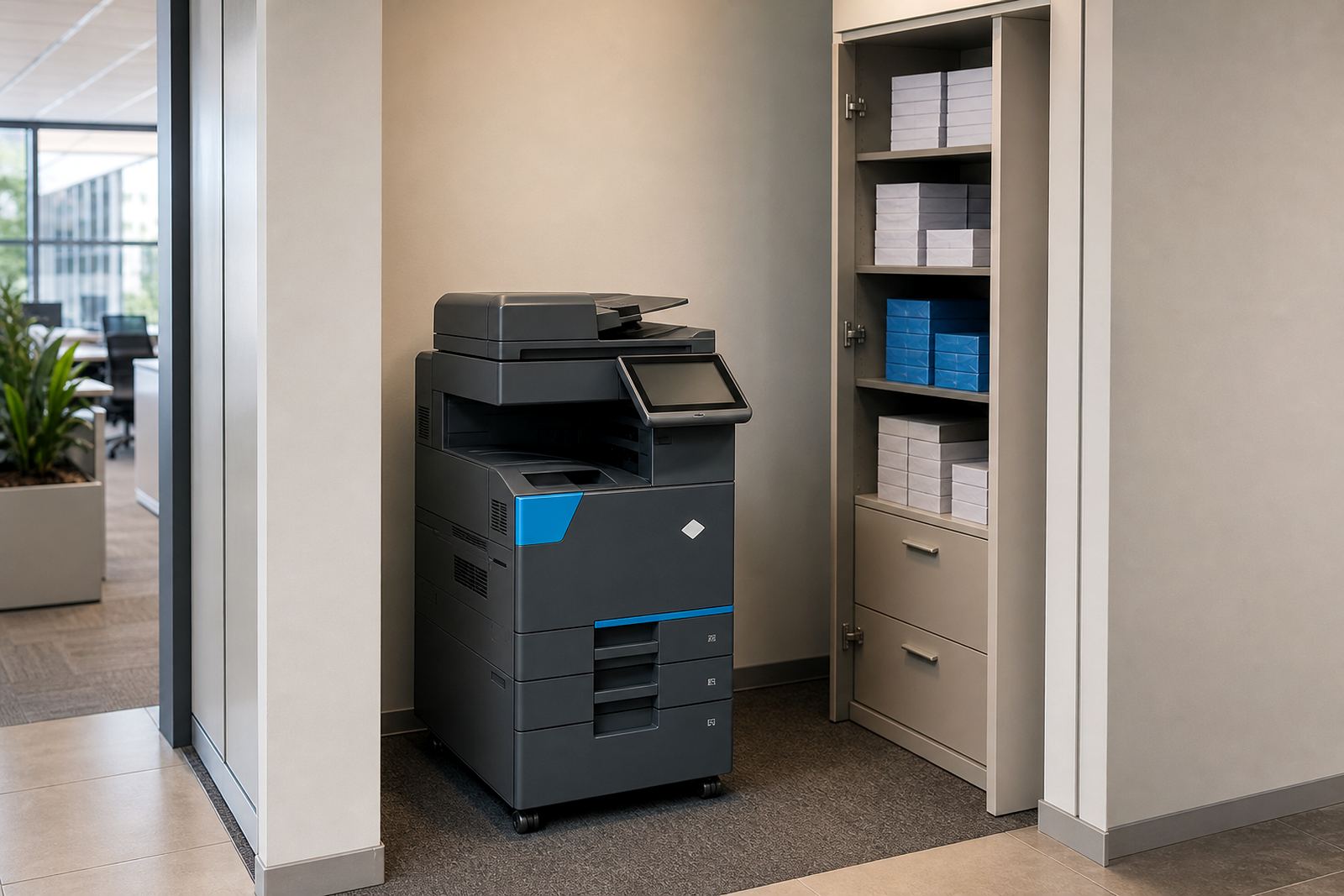
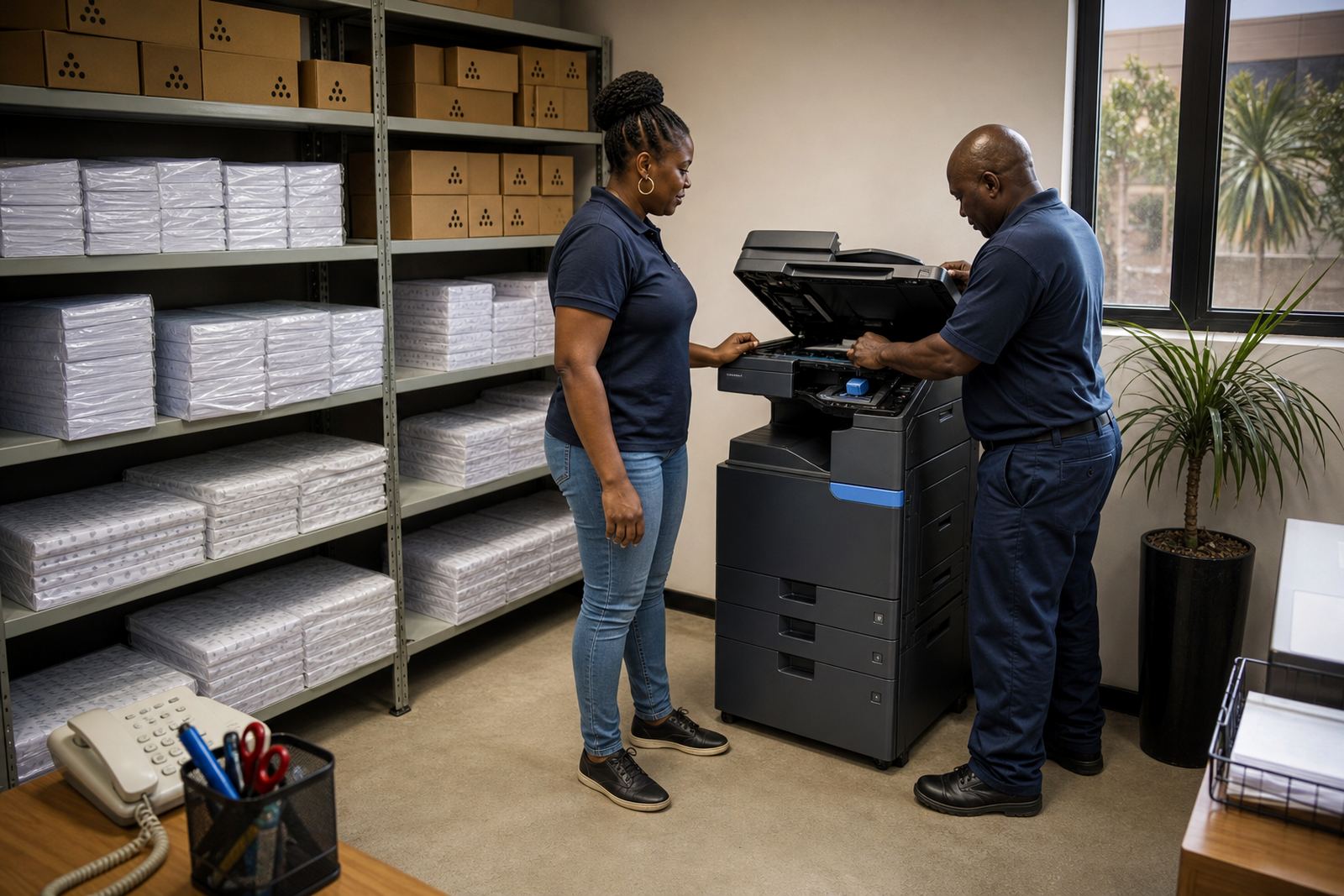
For offices using managed print plans, the storage area needs clear zones. Keep sealed paper cartons off the floor, keep toner boxes away from direct sun and windows, and leave a dry route for staff who fetch stock during the week. In Midrand offices, where the air can swing from dry to sticky, that small bit of order helps more than most teams expect.
Paper should stay in its wrapper until needed. Toner should stay sealed until fitting day. Once a box is open, dust and moisture have more chance to get in and the machine starts dealing with poor feed or uneven output. A spare shelf and a labelled bin can do a better job than a crowded cupboard with no plan.
- Use one shelf for paper only
- Keep toner boxes upright and sealed
- Store stock away from windows and leaks
- Leave space for metre checks and quick stock counts
Paper needs a dry, steady place to sit
Toner lasts longer when handling stays calm
Toner cartridges are tougher than paper, but they still need care. They should be stored in their original packaging until use, away from vibration, heat and direct light. A cupboard next to a server rack or a sunny window is not a good place, especially in offices where the support area gets crowded during stock counts.
When a cartridge is moved, keep it level. Shaking it hard or leaving it on a hot counter can leave the powder uneven inside. That may lead to pale prints, grey backgrounding or a machine that looks faulty when the real issue is poor handling in the storeroom.
We often see offices in Pretoria and Durban keep spare toner on top of filing cabinets. It seems practical, but the cleaner habit is to use one marked shelf for current stock and another for reserve stock. That way the team can tell what is ready to fit, what is still boxed and what should be sent with a machine swap at the end of term.
- Do not open toner boxes early
- Keep cartridges level during storage
- Separate ready stock from reserve stock
- Mark colour toner clearly from mono toner
A neat stock system makes metre billing easier
Managed print plans depend on metre readings, monthly rental and click charges that track actual use. If the consumables area is untidy, stock gets counted twice or not at all, and the people checking usage have to guess what has been fitted and what is still sitting on the shelf.
A simple shelf label for each machine goes a long way. Keep the toner for one copier together with the paper size it uses most often, then note the last metre reading beside it. That makes service visits easier and helps the accounts side understand where the usage is climbing. It also supports fleet review work when an office wants to compare mono and colour volumes across different departments.
For schools and practices, the point is even clearer. Front office printing, internal records and teaching packs all use stock differently. If the support area is split by machine, the team can see which device is consuming the most paper and whether a mono unit would be better for one side of the office while colour stays in another.