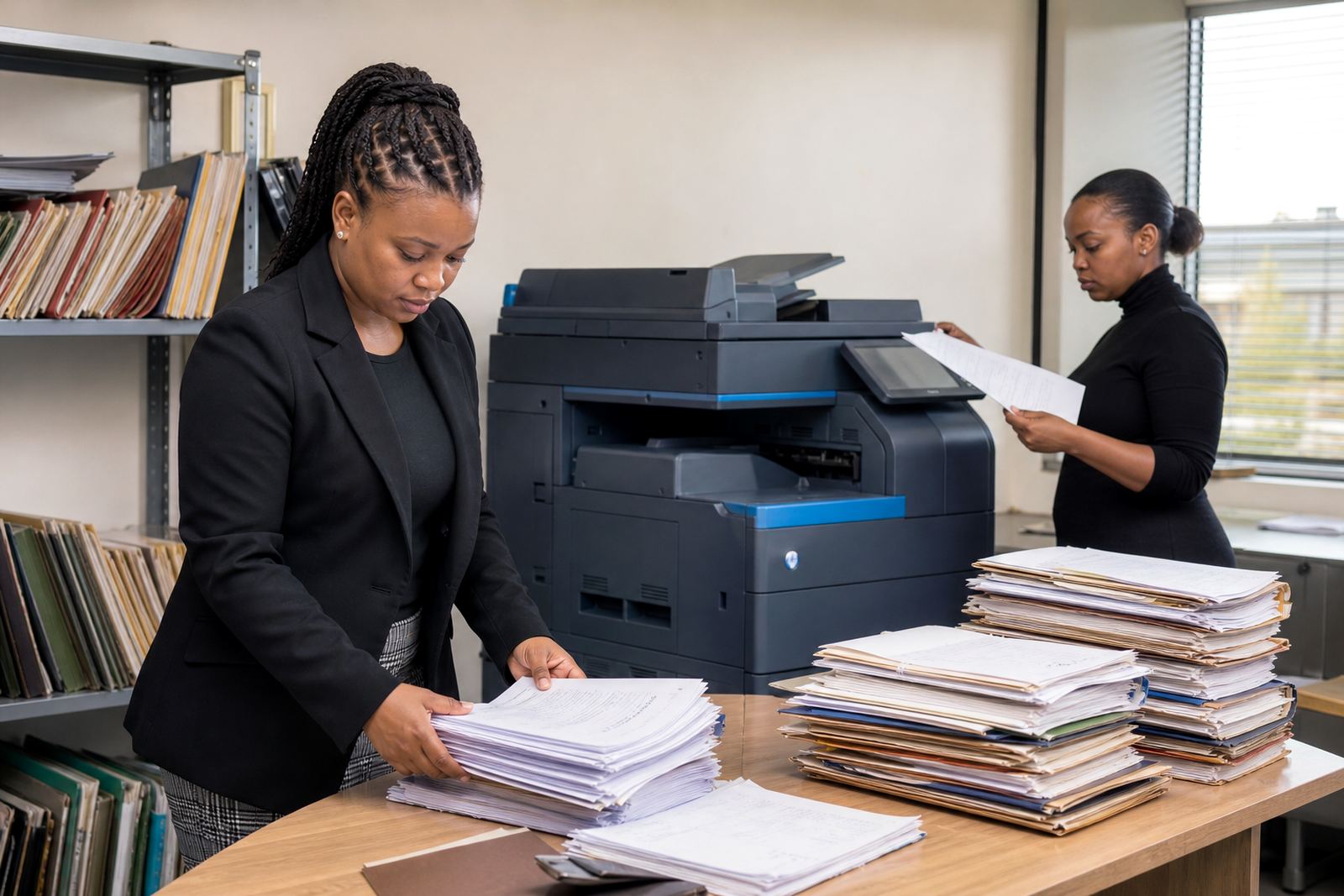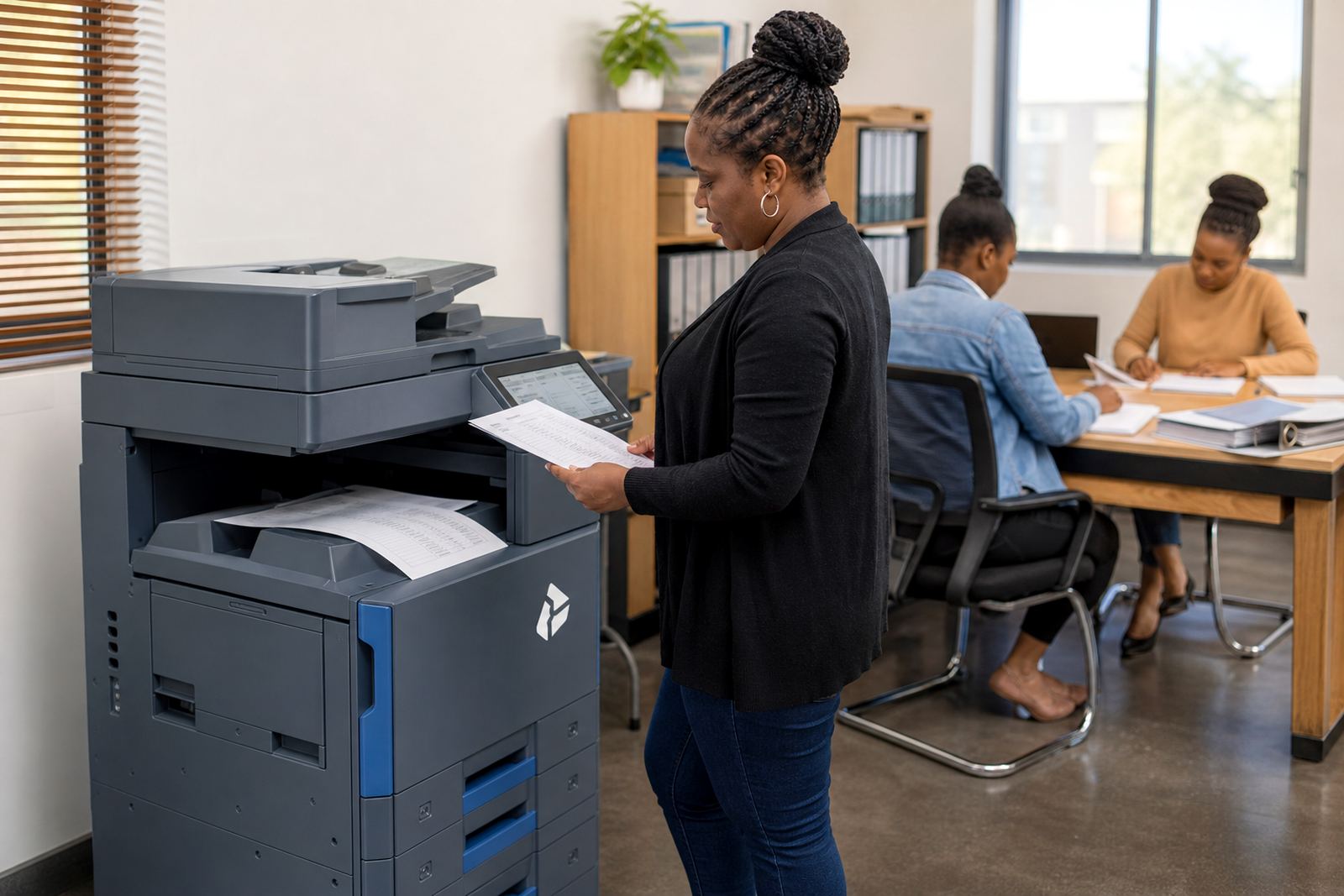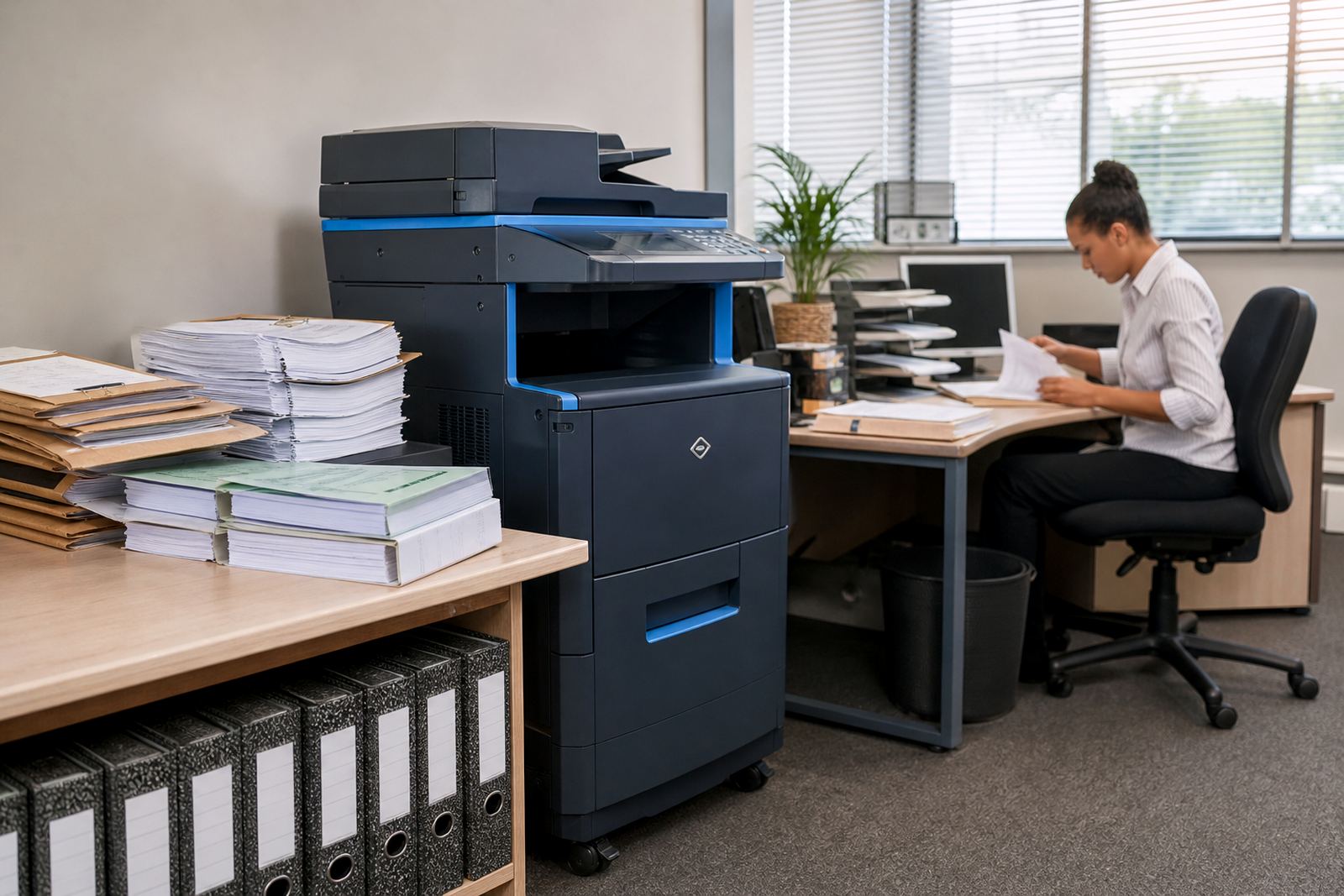

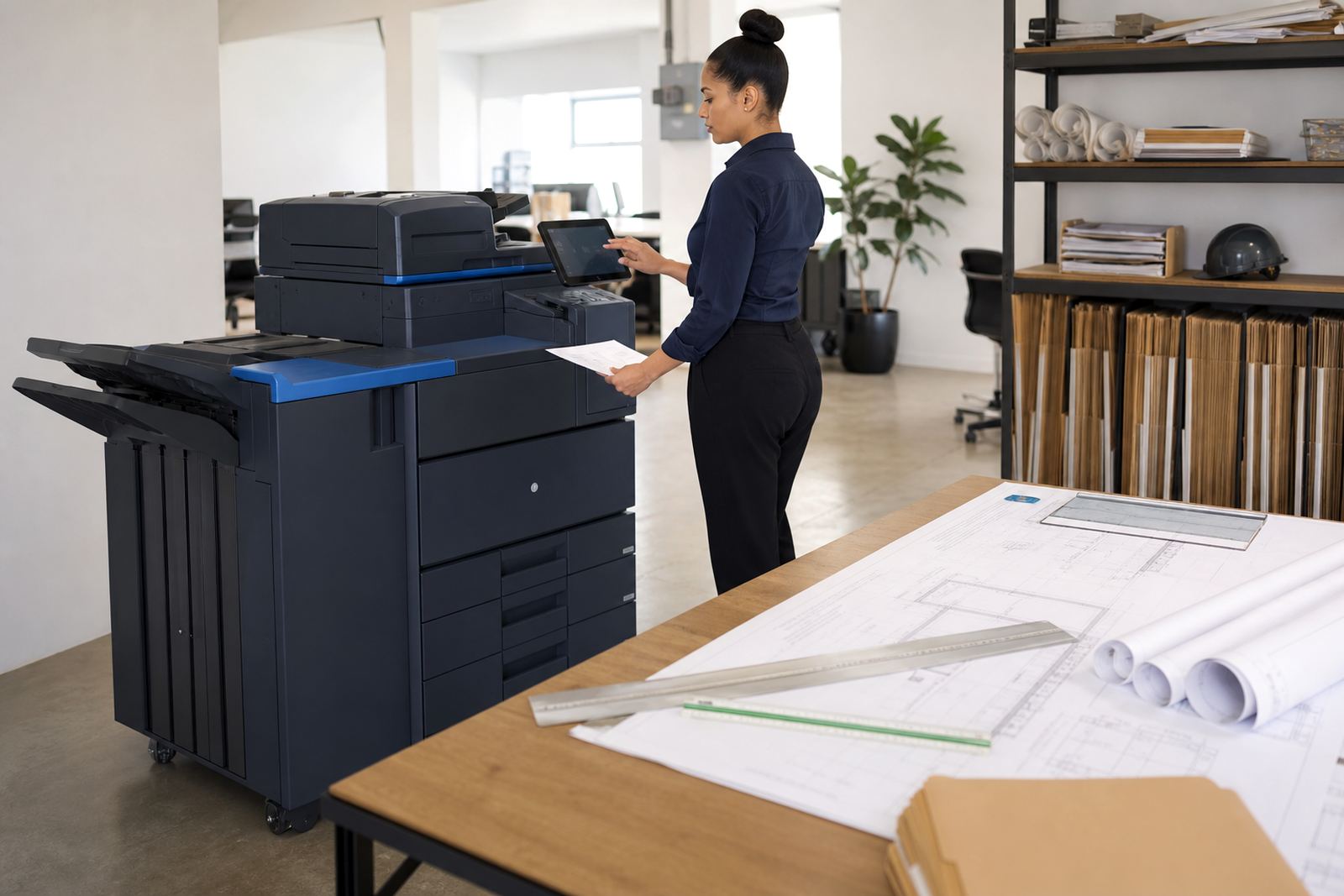
When drawings, mark-ups and minutes all hit one tray
An engineering office can move from tender packs to drawings and site notes in the same morning, so the print room has to stay practical. A managed rental plan keeps the machine in service, toner included, with billing tied to metre reads rather than a guess at monthly use. That helps when the office wants one clear monthly figure for the rental and separate click charges for colour or mono pages, depending on how the fleet is set up.
For A3 work, the machine usually needs stronger paper handling, duplex printing, scanning and a feeder that can cope with thick packs of notes. Offices in Halfway House, Midrand, Sandton and Centurion often ask for a unit that can move from mono contract sets to colour mark-ups without making the team swap devices for every job.
What sits well in an engineering office layout
A small design team may only need one A3 multifunction machine near accounts and project admin. A larger consulting floor often works better with a central copier and a second point for scanning, especially where site teams hand in folded drawings and signed sheets. Keep the device close to the people who print often, but out of the path of foot traffic and meeting-room noise.
- Mono printing for high-volume notes, schedules and reports
- Colour output for mark-ups, presentations and client packs
- Scan to send us a message for drawings, approvals and site records
- Secure print for confidential tenders and salary files
- Network setup so more than one team can send jobs cleanly
For offices with a mix of engineers, draughting staff and admin people, user handover matters as much as the machine. If the team does not know how to release a secure job or change scan destinations, the printer will look like the problem when the setting was wrong from the start.
How the numbers are usually split in Rand
Managed print pricing normally breaks into a monthly rental for the machine and click charges for pages used. Mono clicks are usually lower, colour clicks cost more, and A3 pages can affect the total where plans carry more imaging coverage. That structure is useful for engineering offices because heavy report months and lighter admin months do not need separate buying decisions for each spike.
For budgeting, many offices first look at a setup in the low thousands of Rand per month for a single device, then layer on usage charges tied to actual output. A larger floor with several departments can sit higher once scanning, sorting trays, extra drawers and a stronger service plan are added. It is worth setting the plan against real page habits, not just the paper tray size.
Toner, metre reads and the service side that keeps pace
Toner supply, metre reading support and on-site servicing sit at the centre of a rental agreement. If the office runs a few busy project teams, the metre reading process needs to be simple and the service record clean, otherwise the figures drift and no one trusts the statement. That is why the consumable supply and the page count should line up each month, with no loose assumptions left hanging.
- Regular toner supply matched to the agreed usage plan
- On-site servicing for rollers, feed issues and error faults
- Breakdown response for machines that stop in the middle of a run
- Fleet review where the office has too much or too little capacity
- Machine relocations when a department moves floors or offices
A good field technician will also check paper stock, driver settings and scan destinations. Small faults often start with the wrong paper weight, a half-set address book, or a tray loaded badly, and that kind of thing can waste half a morning if no one notices it early.
Mistakes that make A3 printing more expensive than it should be
The common mistake is renting a copier that is too small for the real load. Engineering offices often underestimate how many pages a month come out once drawings, mark-ups, site packs and meeting papers are included. Another mistake is choosing colour when most output is mono, or choosing mono only when the office regularly needs presentation sets and marked-up plans.
A second problem is poor scan planning. If the office wants scan to message, but no one has checked folder names, address lists or file size limits, then the feature sits unused. Secure print can also get ignored until a confidential quote lands in the tray and is picked up by the wrong person, which is a bad day no matter how neat the office looks.
We also see delays when a business keeps old paper habits after a machine swap. The equipment may be better, but if people still print every draft in colour or use A3 for material that fits on A4, the metre climbs far quicker than expected.
Swaps, relocations and the end of a term
End-of-term swaps matter in offices that change shape during the year. A consulting team may grow for a tender cycle, then scale down once the project closes. Rental plans work best when the machine can be replaced, shifted or rebalanced instead of forcing the office to carry the wrong device for months. That also helps where branches in Johannesburg, Pretoria, Durban, Cape Town or Bloemfontein need different usage patterns.
Before the term ends, the office should know whether the next stage needs more scan capacity, higher mono volume or stronger colour control. If the team changes floors or a new department opens in the building, machine relocation can save time and keep the work flowing without buying a second machine too early.