
Start with the job the machine must do every week
The support promise should be written in plain terms. Ask who takes the first call, who visits site, and what happens if the fault needs parts or a machine swap. A proper service level is more than a polite phrase, it needs a clear path from issue to fix.
In managed print, toner supply and metre readings sit inside the same support chain. If toner runs low, the office should know whether stock is monitored remotely or by periodic checks. If metre billing is used, the reading method matters because a disputed count can affect the invoice and the planning for the next cycle.
- Look for a clear breakdown of first contact, technician visit and escalation.
- Check whether toner is included or billed separately.
- Ask how metre readings are captured and verified.
- Confirm whether service calls cover labour, parts, or only selected faults.
What a fair response window actually means
Service level talks often use broad language, but the useful detail is the window for attendance and the type of fault covered. A paper feed issue, a toner sensor fault and a network scan problem do not all need the same handling. The best plan states what is treated as urgent, what can wait, and what gets escalated if the first fix does not hold.
For offices in Midrand, Johannesburg, Pretoria and nearby areas, travel time can affect how a service visit is scheduled, especially when several sites are on one contract. The point is not to chase a headline promise, it is to know whether your plan includes on-site servicing, breakdown response and machine swaps where needed.
- Ask what counts as an urgent breakdown.
- Find out whether a recurring fault triggers escalation.
- Check if relocation work is included when an office moves within the same area.
- Confirm whether a temporary replacement forms part of the agreement.
Escalation paths matter when a fault repeats
A copier that fails once is inconvenient. A copier that fails three times in the same month starts disrupting filing, client service and accounts work. Escalation should be clear enough that staff know who to contact when a fault keeps returning, or when a technician visit solves only part of the issue.
Good escalation is practical. It may move from user support to a field technician, then to a deeper machine review or an end-term swap where the machine no longer matches the office load. If the plan includes fleet review, the service team can spot overused devices and move capacity before the problem spreads across the office.
- Check whether repeat faults are logged against the same machine.
- Ask who authorises a swap or relocation.
- See whether fleet review is part of the plan or billed separately.
- Make sure escalation reaches someone who can change the setup, not only log the issue.
The hidden value sits in setup, not only in repairs
Some plans look similar on paper until the office starts using them. Network setup, scan to message setup and secure print setup often decide whether staff can work without calling for help every week. A solid installation should match the office network, user roles and print habits, not just switch the device on and leave.
User handover also matters. If the team does not know how to release a secure job or clear a simple paper path fault, service demand rises for the wrong reasons. That is why installation, training and on-site servicing should be read together when you compare service levels. A lower monthly rental can look attractive, but the real cost may sit in extra call-outs or poor setup.
- Check whether network printing is included in installation.
- Ask if scan-to-message settings are configured on site.
- Confirm that staff get a useful handover, not a rushed demo.
- Look for secure print setup where confidential output is handled.
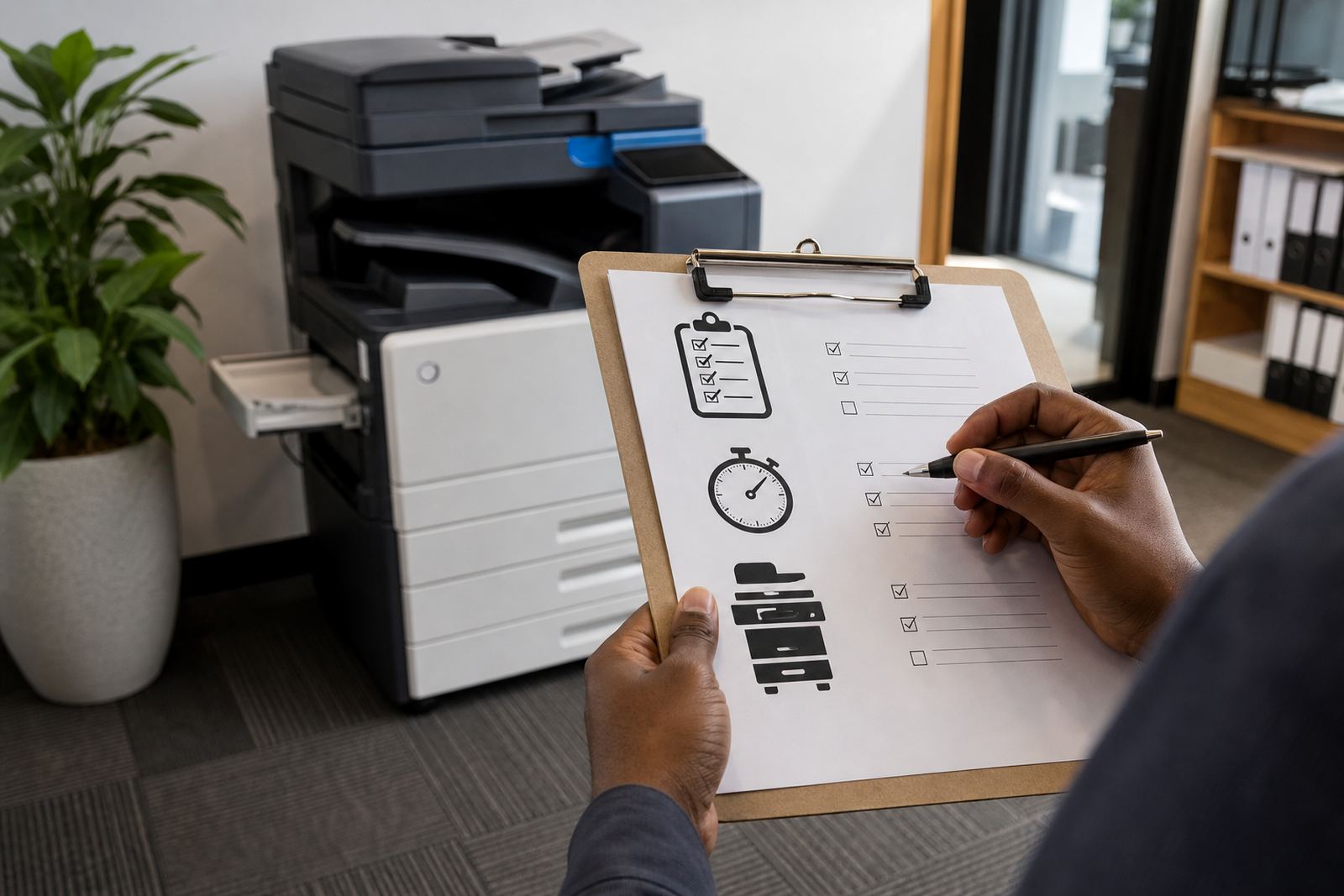
A short checklist for comparing plans side by side
When two offers seem close, compare them on the points that affect the working day. Monthly rental is only one part of the picture. Click charges, toner supply, metre billing, breakdown response and end-term swaps can shift the value of a plan in ways that are easy to miss at first glance.
Use the same questions for every quote so the answers can be compared properly. That keeps the discussion steady and avoids mixing machine cost with support cost. In practical terms, the stronger plan is usually the one that suits the print volume, the user base and the fault pattern in your office.
- What is included in the monthly rental.
- How click charges are measured for mono and colour pages.
- Whether toner, parts and call-outs sit inside the plan.
- How machine swaps work at the end of the term.
- What happens if the site needs relocation or extra users.